Place
Dhaka
Dhaka, the capital and largest city of Bangladesh, has a rich history dating back to the 7th century. The city was founded in 1608 as the capital of Mughal Bengal, becoming an important commercial and cultural center. During the British colonial period, Dhaka experienced significant development. After Bangladesh's independence in 1971, the city became the country's capital. Located on the banks of the Buriganga River, Dhaka is known for its diverse architecture, from colonial buildings to impressive mosques. The city is a vibrant economic and cultural center, renowned for its textile industry, especially for the production of muslin and saris.
Attractions
All information
identity
Id
fd8e43fc-f766-4785-b63e-4648dd2c0bdb
Id
03b78f54-4484-4d48-9bdd-308959481478
Id
fd8e43fc-f766-4785-b63e-4648dd2c0bdb
Id
fd8e43fc-f766-4785-b63e-4648dd2c0bdb
Locale
en
Place Type
city
Slug
dhaka
Source Kind
city
seo
Titlu Seo Poza
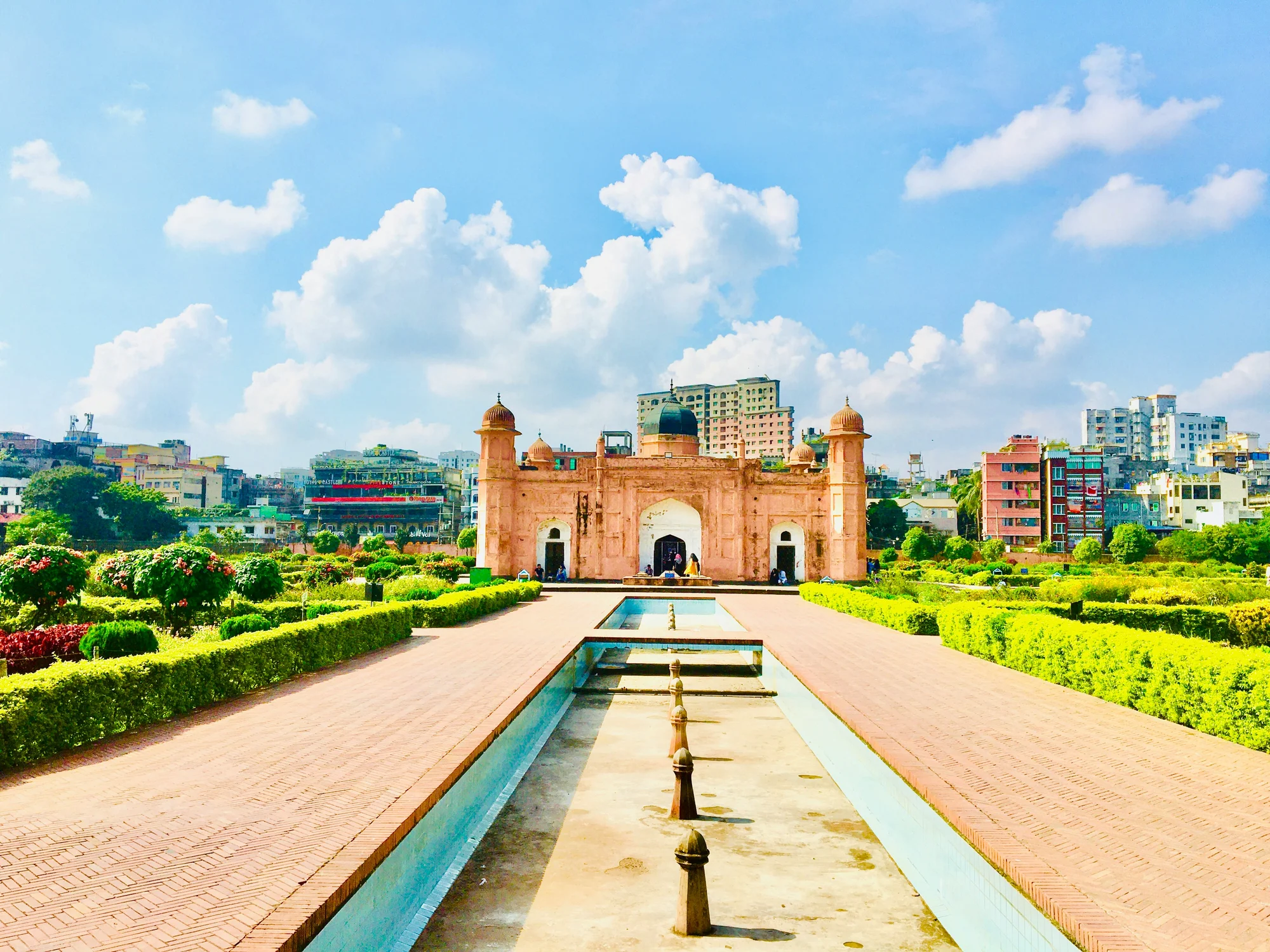
Lalbagh Fort in Dhaka, Bangladesh
Titlu Seo Poza
Lalbagh Fort in Dhaka, Bangladesh
media
Alt Text Poza
Lalbagh Fort in Dhaka with lush gardens and a blue sky.
Alt Text Poza
Lalbagh Fort in Dhaka with lush gardens and a blue sky.
Autor Poza
Masba Molla
Autor Poza
Masba Molla
Image Alt Text
Lalbagh Fort in Dhaka with lush gardens and a blue sky.
Image Author
Masba Molla
Image Author Url
https://unsplash.com/@masbamolla
Image Description
A vibrant view of Lalbagh Fort, a historical landmark in Dhaka, Bangladesh, surrounded by lush gardens and a clear blue sky.
Image Description
A vibrant view of Lalbagh Fort, a historical landmark in Dhaka, Bangladesh, surrounded by lush gardens and a clear blue sky.
Image Description
A vibrant view of Lalbagh Fort, a historical landmark in Dhaka, Bangladesh, surrounded by lush gardens and a clear blue sky.
Image Source
Unsplash
Image Title
Lalbagh Fort in Dhaka, Bangladesh
Image Url
https://media.wanderbase.io/explore/places/city/fd8e43fc-f766-4785-b63e-4648dd2c0bdb.webp
Image Web Url
https://unsplash.com/photos/brown-building-during-daytime-Cdwi5n7Gwes
Link Autor Poza
https://unsplash.com/@masbamolla
Link Autor Poza
https://unsplash.com/@masbamolla
Link Web Poza
https://unsplash.com/photos/brown-building-during-daytime-Cdwi5n7Gwes
Link Web Poza
https://unsplash.com/photos/brown-building-during-daytime-Cdwi5n7Gwes
Poza
https://images.unsplash.com/photo-1564034503-e7c9edcb420c?crop=entropy&cs=srgb&fm=jpg&ixid=M3w3MDc1ODN8MHwxfHNlYXJjaHwxfHxEaGFrYXxlbnwwfDB8fHwxNzQxNDUzODEzfDA&ixlib=rb-4.0.3&q=85
Poza
https://images.unsplash.com/photo-1564034503-e7c9edcb420c?crop=entropy&cs=srgb&fm=jpg&ixid=M3w3MDc1ODN8MHwxfHNlYXJjaHwxfHxEaGFrYXxlbnwwfDB8fHwxNzQxNDUzODEzfDA&ixlib=rb-4.0.3&q=85
Source Image Url
https://images.unsplash.com/photo-1564034503-e7c9edcb420c?crop=entropy&cs=srgb&fm=jpg&ixid=M3w3MDc1ODN8MHwxfHNlYXJjaHwxfHxEaGFrYXxlbnwwfDB8fHwxNzQxNDUzODEzfDA&ixlib=rb-4.0.3&q=85
Sursa Poza
Unsplash
Sursa Poza
Unsplash
tickets
Gyg Code
32163
Gyg Code
32163
Gyg Code
32163
editorial
Status
published
general
Airport Transport
The main airport serving Dhaka is Hazrat Shahjalal International Airport. Transfer options include: 1. Taxi: The most convenient option, takes about 30-60 minutes depending on traffic. The cost is around 400-600 Taka. 2. Bus: There are buses operated by Biman Bangladesh Airlines that connect the airport to the city center. The journey takes about 60-90 minutes, and the cost is lower, around 60-100 Taka. 3. Car rental: Available at the airport, but not recommended for those unfamiliar with Dhaka's traffic.
Best Time To Visit
The best time to visit Dhaka is between October and March, when the weather is cooler and drier. During this period, temperatures are moderate, ranging between 20°C and 30°C, and humidity is lower. Avoid the summer months (April-September) when temperatures can exceed 35°C and monsoon rains are frequent. Winter (December-February) offers pleasant conditions for exploring the city, but can be crowded due to the peak tourist season.
Country Id
ec6fc498-7ac4-4a78-960d-fa5b632730bd
Created At
2026-06-17T21:10:31.0739+00:00
Created At
2026-06-17T21:11:55.558927+00:00
Description
Dhaka, the capital and largest city of Bangladesh, has a rich history dating back to the 7th century. The city was founded in 1608 as the capital of Mughal Bengal, becoming an important commercial and cultural center. During the British colonial period, Dhaka experienced significant development. After Bangladesh's independence in 1971, the city became the country's capital. Located on the banks of the Buriganga River, Dhaka is known for its diverse architecture, from colonial buildings to impressive mosques. The city is a vibrant economic and cultural center, renowned for its textile industry, especially for the production of muslin and saris.
Festivals Events
1. Pohela Boishakh (Bengali New Year): April 14, celebrated with colorful parades and cultural festivals. 2. Dhaka Art Festival: February, featuring local and international artists. 3. Eid-ul-Fitr and Eid-ul-Adha: Variable dates according to the Islamic calendar, celebrated with religious and cultural festivities. 4. Dhaka International Film Festival: January, showcasing films from Bangladesh and around the world. 5. Ekushey Book Fair: February, the largest book fair in Bangladesh.
Ideal Days
4-5 days. This interval allows for exploring the city's main attractions, including Lalbagh Fort, Star Mosque, Parliament, and important museums, as well as a foray into the vibrant street life and traditional bazaars.
Kiwi Destination
Dhaka
Name
Dhaka
Place Id
fd8e43fc-f766-4785-b63e-4648dd2c0bdb
Public Transport
Dhaka's public transport system includes: 1. Buses: The main means of public transport, with numerous lines covering the city. There are standard and "premium" air-conditioned buses. Prices are affordable, starting from 5-30 Taka per trip. 2. CNG (auto rickshaw): Three-wheeled vehicles, popular for short distances. The price is negotiated before the trip. 3. Rickshaw: Human-pulled vehicles, used for very short distances in less crowded areas. 4. Metro: Dhaka's metro system is under construction, with the first line planned to open in the near future. Note: Traffic in Dhaka is extremely congested, and journeys may take longer than you might expect.
Shopping
1. New Market: Traditional market with a wide variety of local products, including textiles and handicrafts. 2. Bashundhara City Shopping Complex: One of the largest malls in South Asia, with international and local stores. 3. Jamuna Future Park: Modern mall with a wide range of shops and entertainment areas. 4. Aarong: Chain of stores selling high-quality traditional Bengali handicrafts. 5. Banga Bazar: Known for affordable clothing, including export products. 6. Dhanmondi: Popular shopping area with numerous boutiques and cafes. Specific souvenirs include silk sarees, jute products, wooden handicrafts, and traditional ceramics.
Tips
• The emergency number in Bangladesh is 999. • Traffic in Dhaka is extremely congested, plan your trips with extra time. • Tipping is not mandatory but is appreciated in restaurants and hotels (10-15%). • Respect the conservative dress code, especially when visiting religious places. • Tap water is not drinkable, consume only bottled water.
Traditional Foods
• Panta Ilish: Ilish fish (shad) cooked with pumpkin leaves, a traditional Bengali dish. • Kacchi Biryani: Aromatic rice cooked with lamb, spices, and potatoes, specific to the Dhaka region. • Fuchka: Popular street snack consisting of crispy balls filled with potatoes, chickpeas, and spicy condiments. • Bhuna Khichuri: A rice and lentil-based dish cooked with various vegetables and spices. • Chotpoti: Spicy chickpea soup served with boiled eggs and various condiments.
Updated At
2026-06-17T22:32:05.151511+00:00
Updated At
2026-06-17T21:22:21.59273+00:00
Where To Stay
1. Gulshan: Luxury residential area, popular among expats and tourists. Advantages: Safety, international restaurants, embassies. Disadvantages: Higher prices, further from historical attractions. 2. Banani: Close to Gulshan, offers a variety of hotels and apartments. Advantages: Modern commercial areas, nightlife. Disadvantages: Heavy traffic. 3. Dhanmondi: Central area with a mix of accommodation options. Advantages: Close to universities and cultural areas. Disadvantages: Can be crowded. 4. Old Dhaka: For those who want to experience the historical atmosphere. Advantages: Close to historical attractions, authentic experience. Disadvantages: Less comfortable, can be overwhelming for some tourists. 5. Uttara: Newer area, close to the airport. Advantages: Less crowded, modern accommodation options. Disadvantages: Far from the city center.
imported
Continent
Asia
Continent
Asia
Cumparaturi
1. New Market: Traditional market with a wide variety of local products, including textiles and handicrafts. 2. Bashundhara City Shopping Complex: One of the largest malls in South Asia, with international and local stores. 3. Jamuna Future Park: Modern mall with a wide range of shops and entertainment areas. 4. Aarong: Chain of stores selling high-quality traditional Bengali handicrafts. 5. Banga Bazar: Known for affordable clothing, including export products. 6. Dhanmondi: Popular shopping area with numerous boutiques and cafes. Specific souvenirs include silk sarees, jute products, wooden handicrafts, and traditional ceramics.
Cumparaturi
1. New Market: Traditional market with a wide variety of local products, including textiles and handicrafts. 2. Bashundhara City Shopping Complex: One of the largest malls in South Asia, with international and local stores. 3. Jamuna Future Park: Modern mall with a wide range of shops and entertainment areas. 4. Aarong: Chain of stores selling high-quality traditional Bengali handicrafts. 5. Banga Bazar: Known for affordable clothing, including export products. 6. Dhanmondi: Popular shopping area with numerous boutiques and cafes. Specific souvenirs include silk sarees, jute products, wooden handicrafts, and traditional ceramics.
Descriere
Dhaka, the capital and largest city of Bangladesh, has a rich history dating back to the 7th century. The city was founded in 1608 as the capital of Mughal Bengal, becoming an important commercial and cultural center. During the British colonial period, Dhaka experienced significant development. After Bangladesh's independence in 1971, the city became the country's capital. Located on the banks of the Buriganga River, Dhaka is known for its diverse architecture, from colonial buildings to impressive mosques. The city is a vibrant economic and cultural center, renowned for its textile industry, especially for the production of muslin and saris.
Descriere
Dhaka, the capital and largest city of Bangladesh, has a rich history dating back to the 7th century. The city was founded in 1608 as the capital of Mughal Bengal, becoming an important commercial and cultural center. During the British colonial period, Dhaka experienced significant development. After Bangladesh's independence in 1971, the city became the country's capital. Located on the banks of the Buriganga River, Dhaka is known for its diverse architecture, from colonial buildings to impressive mosques. The city is a vibrant economic and cultural center, renowned for its textile industry, especially for the production of muslin and saris.
Destinatie Kiwi
Dhaka
Destinatie Kiwi
Dhaka
E Capitala?
C
E Capitala?
C
Festivaluri Si Evenimente
1. Pohela Boishakh (Bengali New Year): April 14, celebrated with colorful parades and cultural festivals. 2. Dhaka Art Festival: February, featuring local and international artists. 3. Eid-ul-Fitr and Eid-ul-Adha: Variable dates according to the Islamic calendar, celebrated with religious and cultural festivities. 4. Dhaka International Film Festival: January, showcasing films from Bangladesh and around the world. 5. Ekushey Book Fair: February, the largest book fair in Bangladesh.
Festivaluri Si Evenimente
1. Pohela Boishakh (Bengali New Year): April 14, celebrated with colorful parades and cultural festivals. 2. Dhaka Art Festival: February, featuring local and international artists. 3. Eid-ul-Fitr and Eid-ul-Adha: Variable dates according to the Islamic calendar, celebrated with religious and cultural festivities. 4. Dhaka International Film Festival: January, showcasing films from Bangladesh and around the world. 5. Ekushey Book Fair: February, the largest book fair in Bangladesh.
Latitutine
23.8103
Latitutine
23.8103
Longitundine
90.4125
Longitundine
90.4125
Mancaruri Traditionale
• Panta Ilish: Ilish fish (shad) cooked with pumpkin leaves, a traditional Bengali dish. • Kacchi Biryani: Aromatic rice cooked with lamb, spices, and potatoes, specific to the Dhaka region. • Fuchka: Popular street snack consisting of crispy balls filled with potatoes, chickpeas, and spicy condiments. • Bhuna Khichuri: A rice and lentil-based dish cooked with various vegetables and spices. • Chotpoti: Spicy chickpea soup served with boiled eggs and various condiments.
Mancaruri Traditionale
• Panta Ilish: Ilish fish (shad) cooked with pumpkin leaves, a traditional Bengali dish. • Kacchi Biryani: Aromatic rice cooked with lamb, spices, and potatoes, specific to the Dhaka region. • Fuchka: Popular street snack consisting of crispy balls filled with potatoes, chickpeas, and spicy condiments. • Bhuna Khichuri: A rice and lentil-based dish cooked with various vegetables and spices. • Chotpoti: Spicy chickpea soup served with boiled eggs and various condiments.
Numar Ideal Zile
4-5 days. This interval allows for exploring the city's main attractions, including Lalbagh Fort, Star Mosque, Parliament, and important museums, as well as a foray into the vibrant street life and traditional bazaars.
Numar Ideal Zile
4-5 days. This interval allows for exploring the city's main attractions, including Lalbagh Fort, Star Mosque, Parliament, and important museums, as well as a foray into the vibrant street life and traditional bazaars.
Nume
Dhaka
Nume
Dhaka
Perioada Potrivita
The best time to visit Dhaka is between October and March, when the weather is cooler and drier. During this period, temperatures are moderate, ranging between 20°C and 30°C, and humidity is lower. Avoid the summer months (April-September) when temperatures can exceed 35°C and monsoon rains are frequent. Winter (December-February) offers pleasant conditions for exploring the city, but can be crowded due to the peak tourist season.
Perioada Potrivita
The best time to visit Dhaka is between October and March, when the weather is cooler and drier. During this period, temperatures are moderate, ranging between 20°C and 30°C, and humidity is lower. Avoid the summer months (April-September) when temperatures can exceed 35°C and monsoon rains are frequent. Winter (December-February) offers pleasant conditions for exploring the city, but can be crowded due to the peak tourist season.
Poze Candidate
https://unsplash.com/photos/people-walking-on-pedestrian-lane-during-daytime-mO1_udD5iCs https://unsplash.com/photos/beige-concrete-structure-near-grass-field-4SDtJV3RbsI https://unsplash.com/photos/man-in-white-shorts-carrying-a-child-in-white-shorts-D8KUJbEc3cQ https://unsplash.com/photos/bridge-over-water-during-night-time-gHwCxmP9hwM https://www.pexels.com/photo/photo-of-a-dump-truck-across-buildings-2382894/ https://www.pexels.com/photo/photo-of-a-man-standing-beside-boy-2382889/ https://www.pexels.com/photo/man-in-gray-long-sleeve-shirt-holding-on-an-iron-bar-3439423/ https://www.pexels.com/photo/silhouette-of-plant-during-sunset-688763/ https://pixabay.com/photos/man-chains-ocean-dhaka-bangladesh-8802456/ https://pixabay.com/photos/rickshaw-street-color-yellow-3983118/ https://pixabay.com/photos/man-machinery-field-sunrise-5939903/ https://pixabay.com/photos/tanguar-haor-bangladesh-dhaka-7659427/
Poze Candidate
https://unsplash.com/photos/people-walking-on-pedestrian-lane-during-daytime-mO1_udD5iCs https://unsplash.com/photos/beige-concrete-structure-near-grass-field-4SDtJV3RbsI https://unsplash.com/photos/man-in-white-shorts-carrying-a-child-in-white-shorts-D8KUJbEc3cQ https://unsplash.com/photos/bridge-over-water-during-night-time-gHwCxmP9hwM https://www.pexels.com/photo/photo-of-a-dump-truck-across-buildings-2382894/ https://www.pexels.com/photo/photo-of-a-man-standing-beside-boy-2382889/ https://www.pexels.com/photo/man-in-gray-long-sleeve-shirt-holding-on-an-iron-bar-3439423/ https://www.pexels.com/photo/silhouette-of-plant-during-sunset-688763/ https://pixabay.com/photos/man-chains-ocean-dhaka-bangladesh-8802456/ https://pixabay.com/photos/rickshaw-street-color-yellow-3983118/ https://pixabay.com/photos/man-machinery-field-sunrise-5939903/ https://pixabay.com/photos/tanguar-haor-bangladesh-dhaka-7659427/
Regiune
Dhaka Division
Regiune
Dhaka Division
Sfaturi Si Info Utile
• The emergency number in Bangladesh is 999. • Traffic in Dhaka is extremely congested, plan your trips with extra time. • Tipping is not mandatory but is appreciated in restaurants and hotels (10-15%). • Respect the conservative dress code, especially when visiting religious places. • Tap water is not drinkable, consume only bottled water.
Sfaturi Si Info Utile
• The emergency number in Bangladesh is 999. • Traffic in Dhaka is extremely congested, plan your trips with extra time. • Tipping is not mandatory but is appreciated in restaurants and hotels (10-15%). • Respect the conservative dress code, especially when visiting religious places. • Tap water is not drinkable, consume only bottled water.
Tara
Bangladesh
Tara
Bangladesh
Transport Aeroport
The main airport serving Dhaka is Hazrat Shahjalal International Airport. Transfer options include: 1. Taxi: The most convenient option, takes about 30-60 minutes depending on traffic. The cost is around 400-600 Taka. 2. Bus: There are buses operated by Biman Bangladesh Airlines that connect the airport to the city center. The journey takes about 60-90 minutes, and the cost is lower, around 60-100 Taka. 3. Car rental: Available at the airport, but not recommended for those unfamiliar with Dhaka's traffic.
Transport Aeroport
The main airport serving Dhaka is Hazrat Shahjalal International Airport. Transfer options include: 1. Taxi: The most convenient option, takes about 30-60 minutes depending on traffic. The cost is around 400-600 Taka. 2. Bus: There are buses operated by Biman Bangladesh Airlines that connect the airport to the city center. The journey takes about 60-90 minutes, and the cost is lower, around 60-100 Taka. 3. Car rental: Available at the airport, but not recommended for those unfamiliar with Dhaka's traffic.
Transport Public
Dhaka's public transport system includes: 1. Buses: The main means of public transport, with numerous lines covering the city. There are standard and "premium" air-conditioned buses. Prices are affordable, starting from 5-30 Taka per trip. 2. CNG (auto rickshaw): Three-wheeled vehicles, popular for short distances. The price is negotiated before the trip. 3. Rickshaw: Human-pulled vehicles, used for very short distances in less crowded areas. 4. Metro: Dhaka's metro system is under construction, with the first line planned to open in the near future. Note: Traffic in Dhaka is extremely congested, and journeys may take longer than you might expect.
Transport Public
Dhaka's public transport system includes: 1. Buses: The main means of public transport, with numerous lines covering the city. There are standard and "premium" air-conditioned buses. Prices are affordable, starting from 5-30 Taka per trip. 2. CNG (auto rickshaw): Three-wheeled vehicles, popular for short distances. The price is negotiated before the trip. 3. Rickshaw: Human-pulled vehicles, used for very short distances in less crowded areas. 4. Metro: Dhaka's metro system is under construction, with the first line planned to open in the near future. Note: Traffic in Dhaka is extremely congested, and journeys may take longer than you might expect.
Unde Sa Te Cazezi
1. Gulshan: Luxury residential area, popular among expats and tourists. Advantages: Safety, international restaurants, embassies. Disadvantages: Higher prices, further from historical attractions. 2. Banani: Close to Gulshan, offers a variety of hotels and apartments. Advantages: Modern commercial areas, nightlife. Disadvantages: Heavy traffic. 3. Dhanmondi: Central area with a mix of accommodation options. Advantages: Close to universities and cultural areas. Disadvantages: Can be crowded. 4. Old Dhaka: For those who want to experience the historical atmosphere. Advantages: Close to historical attractions, authentic experience. Disadvantages: Less comfortable, can be overwhelming for some tourists. 5. Uttara: Newer area, close to the airport. Advantages: Less crowded, modern accommodation options. Disadvantages: Far from the city center.
Unde Sa Te Cazezi
1. Gulshan: Luxury residential area, popular among expats and tourists. Advantages: Safety, international restaurants, embassies. Disadvantages: Higher prices, further from historical attractions. 2. Banani: Close to Gulshan, offers a variety of hotels and apartments. Advantages: Modern commercial areas, nightlife. Disadvantages: Heavy traffic. 3. Dhanmondi: Central area with a mix of accommodation options. Advantages: Close to universities and cultural areas. Disadvantages: Can be crowded. 4. Old Dhaka: For those who want to experience the historical atmosphere. Advantages: Close to historical attractions, authentic experience. Disadvantages: Less comfortable, can be overwhelming for some tourists. 5. Uttara: Newer area, close to the airport. Advantages: Less crowded, modern accommodation options. Disadvantages: Far from the city center.
map
Latitude
23.81
Locatie
Dhaka
Locatie
Dhaka
Location Label
Dhaka
Longitude
90.41